A lease looks cheaper on a spreadsheet until you add everything a lease doesn't include. Here's the honest comparison for teams scaling in Visakhapatnam.
When a team crosses fifteen or twenty people, the question stops being 'do we need our own space?' and becomes 'do we want to run one?' Those are very different questions, and the answer usually points to a managed office rather than a traditional lease.
What a lease really asks of you
A lease gives you four walls. Everything that makes those walls usable is your problem: designing and building out the space, buying furniture, wiring internet, arranging power backup, hiring housekeeping and security, managing vendors, and handling every repair for the length of the term. It's a second operation bolted onto your first.
What a managed office gives you instead
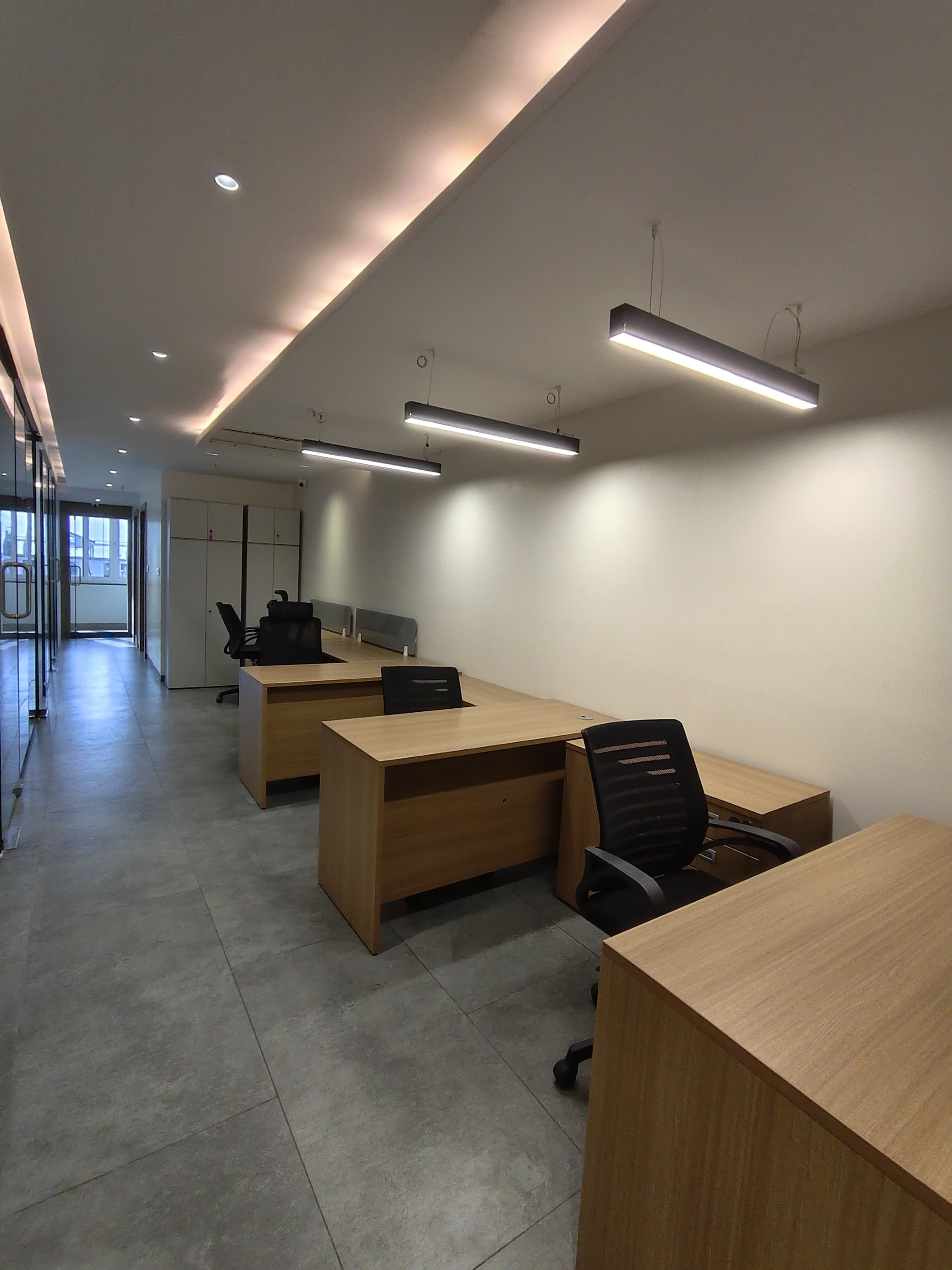
- A move-in-ready floor, fitted and furnished to your brief.
- Reception, housekeeping, IT and security — staffed and run for you.
- One predictable monthly invoice covering rent, utilities, internet and upkeep.
- The flexibility to add cabins or take a whole floor as headcount climbs.
The three costs a lease hides
- Capital: fit-out and deposits lock up cash you'd rather deploy in the business.
- Time: weeks of your leaders' attention spent on a build-out instead of customers.
- Rigidity: a fixed footprint for years, whether you grow into it or out of it.
Move in. Plug in. Grow faster — and spend your energy on the business, not the building.
When a lease still makes sense
If you're a large, stable operation with a fixed headcount and very specific infrastructure needs, a long lease can work. For almost everyone else in Vizag — teams still growing, still forecasting, still proving the market — a managed office removes the risk and the distraction, and lets you scale on your own timeline.
Thinking about space in Vizag?
Come see a floor — desks, cabins and managed offices across nine centres, month to month. No lease, no pressure.
Book a site visit